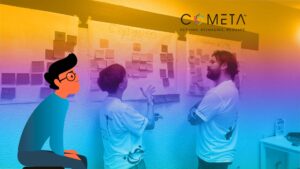
Horizontal learning spaces are essential for networks and collective platforms because they recognize that every organization brings valuable knowledge and tools shaped by everyday experience. By fostering peer-to-peer exchange, these spaces promote collective construction, strengthen inter-organizational relationships, and create context-specific solutions. This kind of learning encourages reflection, adaptation, and transformation of our practices—and, in turn, our advocacy strategies.
Amalinalli Martínez, Junior Consultant at COMETA
For some time now, one of the key tools we’ve nurtured to strengthen collective and political power has been the creation of networks among civil society organizations. These networks and collective spaces allow us to create learning environments through workshops, trainings, and other capacity-building initiatives—amplified by the strength of the collective.
What Are the Benefits of this Spaces?
Collective learning spaces are especially valuable because networks bring together diverse perspectives—across territories, strategies, capacities, and modes of collaboration. One of the most enriching forms of exchange within these networks is horizontal learning, which takes place among peers. Rather than relying on a single expert, it draws from a range of lived experiences shared through practice.
Knowledge rooted in experience allows for the exchange of situated insights that can be adapted to similar contexts. In addition, horizontal learning emphasizes active listening among equals and fosters dialogue and shared decision-making on shared issues.
Networks of organizations that come together around shared issues find in horizontal learning a vital tool to:
- Bringing together diverse perspectives and ways of doing
- Identifying priorities rooted in local territories
- Strengthening collective strategic thinking
- Detecting shared patterns, tensions, and opportunities
These spaces are not only about sharing knowledge—they help cultivate a more open, participatory, and reflective organizational culture, where dialogue is prioritized and collective meaning-making is deeply valued.
To speak of horizontal learning is to center a different way of building knowledge. It means recognizing that there isn’t a single voice that teaches while others listen, but rather a chorus of voices engaging in dialogue—each shaped by its own realities, insights, and paths.
It’s a move away from one-way knowledge transfer toward peer-to-peer exchange, where every participant has something to contribute and something to transform.
That’s why peer learning is not just helpful—it’s essential for collective organization.
It invites us to pause and reflect on our daily work, rethink it, strengthen it, and adapt it. It also demands a willingness to revisit our assumptions, open ourselves to other perspectives, and embrace the idea that knowledge is dynamic—and built together.
What Conditions Enable Horizontal Learning to Fulfill Their Purpose?
For horizontal learning spaces to truly serve their purpose, certain enabling conditions are essential:
- Cultivating trust so participants can speak from experience without fear of judgment.
- Creating participatory dynamics where all voices are heard and valued.
- Ensuring sensitive and insightful facilitation builds reflection grounded in participants’ realities and values.
- Supporting the systematization of collective exchanges so they can circulate among participants and be revisited over time.
When these conditions are present, collective spaces become true laboratories of horizontal learning—not because they are filled with experts, but because each organization brings valuable experience, problem-solving approaches, and knowledge forged through practice.
Sharing these insights enriches others, but also allows each organization to see its own work with fresh eyes—to reflect, strengthen, or reorient its practice. When horizontal learning becomes part of the everyday life of networks and organizations, their collective capacities grow stronger.
A shared sense of purpose and vision emerges—one that inspires and sparks creativity to face challenges together.
What Shared Spaces Could Become Spaces for Collective Learning?
Perhaps it’s not about joining something new, but about seeing the spaces you already inhabit with fresh eyes. Horizontal learning is also a political commitment—a way of engaging in collective spaces through listening, reciprocity, and mutual recognition.
In a context of complex and ever-changing challenges, reweaving knowledge through collective processes can be not only a strategy for strengthening organizations, but also a gesture of care and sustainability. In this light, learning is no longer a one-off activity—it becomes a continuous, rooted practice that shapes the culture of the network or collective and contributes to its long-term resilience.
If you’re looking to strengthen the collaborations you’re part of and foster collective learning, COMETA is here to support you. We’ve partnered with organizations to facilitate strategic thinking and collective reflection —helping teams navigate their daily work with greater clarity, purpose, and connection.We also invite you to read: How to Work on Strategic Vision in Civil Society.